
AI in Higher Education Plan Launched by Yotta and GGSIPU to Transform Learning Across India
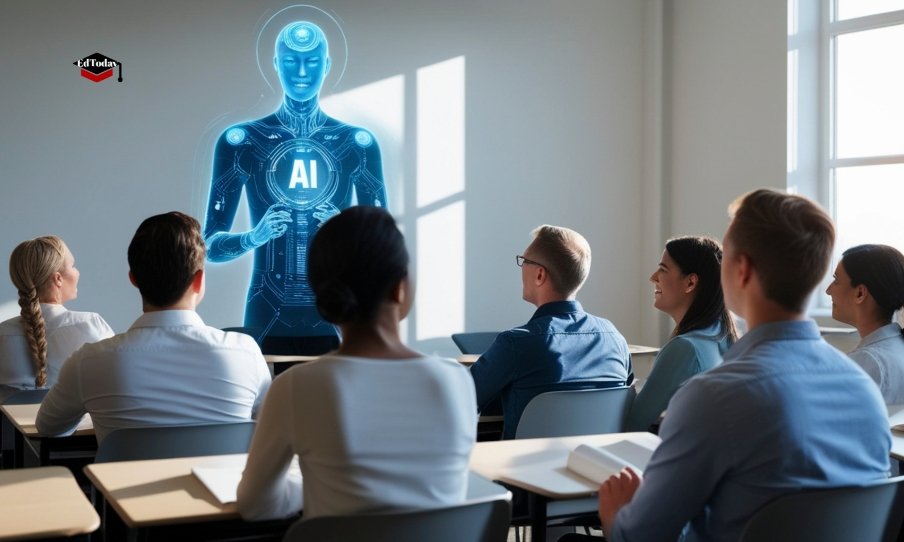
Yotta Data Services and Guru Gobind Singh Indraprastha University (GGSIPU) have inked a memorable contract to introduce an AI-empowered education model in the higher education sector of India. The partnership was proclaimed at the National Conclave on AI Evolution, where the best minds in technology and education met and mingled. The whole thing is very positive for more than 2 lakh students among 125 colleges that are under GGSIPU’s wing.
They want to make education delivery very efficient, individualised, and universal. Yotta is going to give away the cloud infrastructure, the servers, and technical support to educate and equip students with AI-powered courses and tools without any cost for either the students or the colleges. This partnership is a first of its kind in India at such a large scale and thereby, it sets a precedent for the public education sector at large to use advanced technologies the like of which are in even more private sectors.
The AI system, that has been planned for these institutions, will not only take over regular tasks but also help the staff by providing them with students’ performance insights, attendance analysis, and participation patterns. Nowadays, in a lot of institutions, one teacher can only handle a few hundred students effectively. But with AI, this barrier is expected to vanish. The teachers would have more time to be with the students and to help them with learning activities that are human-understanding and guidance-intense without fearing that the other students won’t get support from the teacher.
GGSIPU will also set up an AI Learning Lab that will be the first to develop interactive, AI-powered courses. The university believes that this lab can turn into a beacon for others in India in the near future. In the next three years, the project aims to create such innovative programmes that they will be the ones making traditional constraints in classroom teaching disappear.
Education leaders in large numbers applauded the program for its expected impact. The Vice President of India called this initiative a watershed moment in the history of Indian education. According to him, AI can assist the system in running after student enrollment, quality, and low-cost simultaneously. The Lieutenant Governor of Delhi opined that the learning platform will bring about equal learning opportunities among different regions and social classes.
The Delhi Education Minister accentuated how the project could be a double-edged sword; it would cut educational costs and at the same time, it would improve the quality of education. The model could turn India’s national ambition of 50% gross enrolment ratio in higher education by 2030 into a reality through a radical transformation in the teaching and learning process.
Yotta and GGSIPU have opened up a new avenue for higher education in India by creating a hybrid model of AI and human teaching. This will empower educators to work in a smarter way and students to get access to superior tools, personalized coaching, and new avenues for personal development. If this model proves to be successful, it can be extended to the whole university system, thereby shaping the future of Indian education for a long period of time.