
Enhancing Student Engagement Through Modern Immersive Classroom Tools for the Digital Era 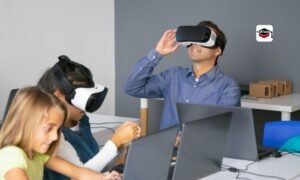
Out there beyond chalkboards and quiet rows, something different takes shape each day. Not just screens replacing books, but minds reaching further because senses get involved too. Imagine standing under Arctic skies while your feet stay on linoleum – this happens now inside schools. Instead of memorizing facts alone, bodies lean into lessons through sound, motion, color. One moment you’re in a building downtown, next you’re floating near Mars with classmates calling out what they see. Learning sticks better when it feels like living instead of listening. Even shy kids speak up when surrounded by coral reefs projected on every wall. It’s less about teaching from front desks, more about guiding curiosity as it moves freely. Rooms once boxed in by walls now open into forests, deserts, even cells beneath skin. What counts as school expands quietly, shaped not by rules but by experience.
The Growth of Hands On Learning Spaces
Out of old-school charts and film strips grew something far stranger now – worlds built from code where lessons unfold in space you step inside. A shift happened quietly, one gadget at a time, until classrooms started breathing digital air. Picture this: instead of reading about Rome, kids stand in its streets, hearing echoes of markets long gone. Seeing is no longer enough; touching, turning, moving matters more now. Some learners never caught fire from textbooks anyway – the noise too loud, the words flat – but here they lean in, adjust angles, open doors themselves. Memory sticks better when it feels like something that actually happened to you, not just passed before your eyes.
Easy access to these tools helped them spread fast. Though expensive gear used to block entry, schools today often run immersive lessons on regular tablets or low-cost headsets – so rolling out programs wide becomes doable. Because everyone gets a chance now, kids across different income levels build tech know-how vital for tomorrow’s jobs. With gadgets simpler to handle, attention moves off how they work and lands on clever uses tackling tough questions. Teachers shift too – they stop being mere lecturers, start shaping learning adventures pushing pupils to question deeply, wander uncharted ideas.
Bridging the Gap Between Theory and Practice
One of the most significant challenges in education is helping students understand the practical relevance of what they learn in textbooks. By integrating immersive classroom tools into the curriculum, teachers can create “sandbox” environments where students can experiment with scientific principles or mathematical equations in real time. Imagine a chemistry lab where students can mix volatile substances in a virtual space, observing the reactions without any physical risk. This level of safety and flexibility encourages a culture of trial and error, which is essential for scientific discovery. The ability to fail safely in a simulated environment builds confidence and grit, qualities that are just as important as academic knowledge in the long run.
Furthermore, these technologies foster empathy and global awareness. Through immersive classroom tools, a student in a rural town can virtually visit a bustling market in Tokyo or a refugee camp in a different continent. These experiences break down geographical and cultural barriers, allowing students to develop a more nuanced understanding of global issues. By seeing the world through someone else’s eyes, learners develop a sense of global citizenship that is vital in our interconnected society. This emotional resonance is something that a standard textbook struggle to achieve, proving that the right technology can actually make the learning process more human and grounded.
Empowering Educators and Cultivating Collaboration
The role of the teacher is elevated when they have access to a suite of immersive classroom tools. These resources provide real-time data and insights into how students are interacting with the material, allowing for more targeted interventions. Instead of waiting for a midterm exam to identify a struggling student, a teacher can see where a learner is getting stuck within a virtual simulation and provide immediate guidance. This data-driven approach allows for a more fluid and responsive classroom dynamic. Moreover, many of these platforms are designed for collaboration, enabling groups of students to work together within a shared digital space to solve puzzles or build complex structures.
Collaboration in a virtual space prepares students for the modern professional world, where remote teamwork and digital communication are the norms. Using immersive classroom tools, students learn to communicate their ideas effectively through various media, including spatial design and interactive storytelling. This multidisciplinary approach ensures that they are not just consumers of technology but creators who can leverage digital assets to express their unique perspectives. As the technology continues to advance, the boundaries between different subjects will likely continue to blur, leading to a more holistic and integrated educational experience that mirrors the complexities of the real world.
Looking Toward the Future of Educational Innovation
As we move forward, the potential for these technologies to reshape the educational landscape is limitless. The continued development of immersive classroom tools will likely involve more sophisticated haptic feedback and artificial intelligence, making simulations feel even more realistic and responsive to individual student needs. We are entering an era where the physical classroom is just one component of a much larger, more vibrant learning ecosystem. The focus will remain on how these tools can support the human elements of teaching—mentorship, inspiration, and critical dialogue—while providing the sensory inputs that make learning truly unforgettable.
The goal is not to replace the teacher or the physical interaction between peers, but to enhance those relationships with tools that spark curiosity and wonder. When a student is excited to put on a headset or interact with a holographic display, they are more likely to engage deeply with the content and ask the kind of “what if” questions that lead to true innovation. By embracing these advancements, we are ensuring that the next generation is equipped with the tools, the empathy, and the critical thinking skills necessary to navigate an increasingly complex world. The journey of discovery is just beginning, and the tools at our disposal are more powerful than ever before.
Read Also: Understanding the Transformative Power of Digital Pedagogy in Modern Educational Environments