
Parents Fear Education Cuts Will Leave Disabled Children Without Support
Emma Miller lives in Wake Forest, North Carolina, with her teenage twins, Devon and Danielle Price, both of whom have autism. While they are verbal and considered high-functioning, their education has been hindered in critical ways. Devon, at age 15, still cannot read or write.
Danielle has endured bullying, severe social anxiety, and despair that once led to self-harm. Miller believes her children would have progressed if the school district had delivered on legally required support.
For years, Miller has said that Wake County failed to provide adequate help. The school district delayed or denied evaluations, placed Devon with an unlicensed aide instead of a trained teacher, and neglected Danielle’s social and emotional needs. These gaps in support, she feels, shaped both children’s struggles.
What the Law Requires and What Parents Say Is Ignored
United States federal law requires public schools to provide a free and appropriate public education for students with disabilities, ensuring they have the same opportunities as others.
Parents of disabled students and advocates argue this standard is often not met. Many districts, they say, fail to conduct reevaluations on time, provide inconsistent accommodations, and leave complaints unanswered. This leaves families to battle for rights that are meant to be guaranteed.
Cuts to the Department of Education’s Oversight Power
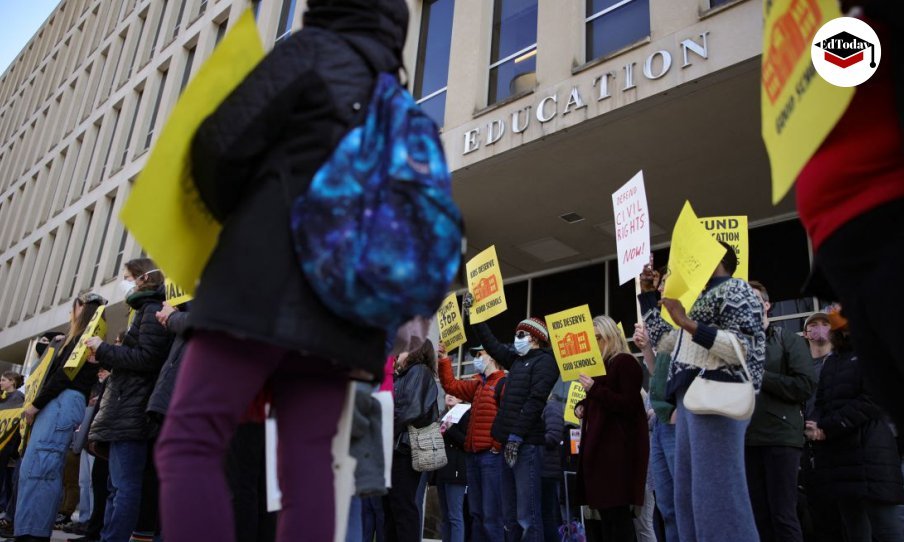
What alarms parents of disabled students most today is the shrinking role of the Department of Education. The changes include:
- Nearly half of the department’s 4,133 employees losing their jobs.
- Closure of seven of the 12 regional offices of the Office for Civil Rights, reducing staff to process thousands of complaints.
- Proposals to dissolve the department completely, shifting authority to states and local districts.
Families fear that with fewer resources, Education Department cuts will leave accountability weakened. For families like Miller’s, this could mean fewer avenues for remedy when schools fail to meet obligations.
Why Parents Say the Cuts Matter
Advocates highlight the scale of the impact. In 2024 alone, the Office for Civil Rights received about 23,000 complaints, the highest number on record. Nearly 37 percent involved disability discrimination.
Disabled students and Black students are already more likely to face harsh punishment, restraint, or isolation. Federal oversight plays a role in limiting these practices. With oversight weakened, families worry such practices will go unchecked. They also question how budget cuts affect disabled students in classrooms where support staff are already stretched thin.
The burden often falls on parents of disabled students to hire lawyers and push districts to comply. Legal action is costly and time-consuming. Families with fewer resources may find themselves with no practical recourse if Education Department cuts further reduce oversight.
What Is at Stake Going Forward
For Miller, the concern is immediate. Her twins are approaching adulthood, yet she fears they may never acquire basic literacy or secure the supports they need. Even when parents succeed in winning recognition from state authorities, implementation is slow. In 2024, state findings confirmed that Wake County had violated her children’s rights, but Miller says most promised remedies remain unfulfilled. This underscores the challenges disabled students face in schools where compliance is delayed or ignored.
Conclusion
The reality is that many parents of disabled students now see their safety net shrinking. Laws exist to protect these children, but without enforcement, protections lose meaning. Parents like Emma Miller want more than policy statements. They want accountability, timely evaluations, and meaningful support for their children.
Advocates stress that special education funding plays a direct role in determining the quality of support children receive. Reductions in special education funding combined with sweeping Education Department cuts risk worsening the impact of education cuts on special needs children.
As the Department of Education’s role weakens, families are left with a pressing question: what tools remain when enforcement fades? The problem is larger than policy, it is about how budget cuts affect disabled students in real classrooms, the challenges disabled students face in schools, and the long-term impact of education cuts on special needs children if change does not happen.
For now, parents of disabled students continue to fight for a system that delivers what the law promises, while advocates call for stronger protections and restored special education funding to secure the future of every child.