
How AI is Redefining Our Daily Lives in 2025
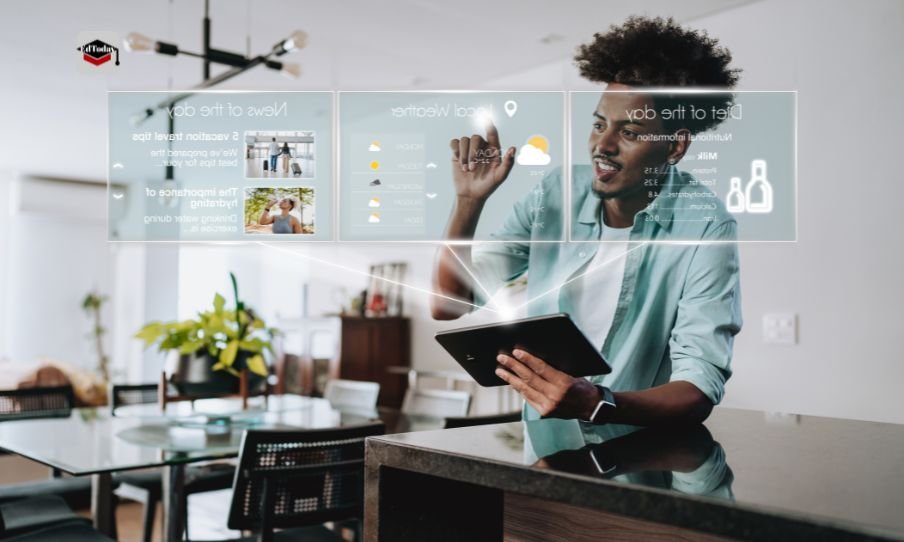
The pace at which artificial intelligence has moved from niche to everyday is startling. According to one recent study from the Pew Research Center, 79% of U.S. experts say people interact with AI in daily life almost constantly or several times a day. This reflects broader AI trends shaping how we live.
Elsewhere the global market for AI tools and services is growing at more than thirty percent per year. What this really means is that you may already be using AI in daily life in ways you barely notice. When you ask a voice assistant to play a song, when your email application suggests a reply, when a map reroutes you around traffic, all these are AI at work. It no longer resides in some distant server but is woven into routines.
That shift changes how we think about daily life: tasks once manual become assisted, decisions once solitary become collaborative. This is part of how AI in 2025 feels more integrated, as well as part of broader AI adoption happening across society. It also shapes How AI is changing daily life in 2025, which is becoming more evident each month.
AI in the Home: smarter comfort and convenience
Think of your home as a canvas where AI in the home quietly paints improvements. Smart speakers suggest the weather and set the heating. Thermostats adapt to your schedule. Apps monitor energy use and suggest savings. Those are small examples, but the trend is clear as smart technology takes root.
Here is a human analogy: imagine someone in the house who watches patterns and quietly asks “Would you like me to turn this off or change that?” That person is the AI system. In AI in 2025 the lines between human-triggered and automated assistance blur.
At the same time, households explore generative AI tools for creative tasks: image generation, text summaries, even home design mockups. The shift from passive tool to active assistant is underway. Users however raise the question of control. The Pew study found that only 14% of adults feel they have a great deal of control over how artificial intelligence is used in their lives. The lesson: convenience and comfort arrive, but with a need for awareness and intentionality. This also contributes to the Impact of AI on work and home life, which continues to evolve.
AI at Work: new tools, new roles
Work life is also changing. According to the McKinsey & Company report, nearly all employees (94%) and C-suite leaders (99%) report familiarity with generative AI tools. The interesting part is the mismatch: leaders estimate that only 4% of employees use generative AI tools for more than 30% of tasks, while employees themselves report use three times higher.
What this means for you as a professional is you may already be using artificial intelligence in your workflow even if your organisation has not officially adopted it. If you are a content lead or writer you might be using AI at work for outline drafting, brainstorming, research summaries. These are no longer experiments but accepted parts of the toolkit.
Yet the shift is not only about automation. It is about augmentation: AI automation does the repetitive or tedious part, freeing people for judgment, creativity, relationship work. For example, one company found that every dollar spent on generative AI tools returned about $3.70 in value. So the focus becomes less “will AI replace me” and more “how do I work alongside AI”. This brings forward AI augmented work, which is now part of AI trends across industries. It also influences How AI is changing daily life in 2025 in professional environments and shows the Impact of AI on work and home life as systems mature.
AI in Health and Well-being: more than fitness apps
AI’s impact in health is less visible perhaps but more profound. Diagnostic tools powered by AI in healthcare are increasingly in use. The 2025 report from the Stanford Institute for Human-Centered Artificial Intelligence notes that AI in 2025 is increasingly embedded in everyday life including healthcare and transportation. On the consumer side, apps monitor sleep, nutrition, stress and suggest actions. In one sense the AI becomes a 24/7 “health companion” which reminds you of patterns you might miss. This shows How AI supports health and well-being on a practical level.
Consider the analogy of a co-pilot: you drive the ship but an assistant monitors the gauges and warns of trouble. That is what AI in healthcare does in medicine and well-being. It helps detect anomalies, identify trends, suggest preventive steps. The caveat: AI suggestions are only as good as the data and oversight behind them. Users must remain active participants. The positive takeaway: health and well-being gain from artificial intelligence not by replacing people but by amplifying their awareness and options. This clarity supports How AI supports health and well-being across daily routines.
AI and Social Interaction: how we connect and learn
Beyond tools and tasks, artificial intelligence is affecting how we talk, how we learn, how we create. For example younger users already draw on AI companions or chatbots for brainstorming, advice and entertainment. While full numbers vary, one survey found 65 percent of AI users were Millennials or Gen Z.
Here is a human scenario: you sit with friends, you open a tablet, you prompt an AI for a story idea or visual concept. The group reacts, adapts, changes the prompt, the AI responds. The dynamic becomes triangular: human-human-machine. Learning platforms use AI automation to personalise lessons. Social media uses artificial intelligence to curate feeds or detect harmful content.
But this also raises questions: how much do we trust the AI suggestion? How aware are we of the filter or bias behind it? In the survey by Pew, 59% of adults said they had little or no control over how artificial intelligence was used in their lives. So the conversation becomes about connection and autonomy: we gain convenience and creativity but must retain agency. These shifts illustrate How AI influences social interaction, which shapes cultural norms. It also reinforces How AI influences social interaction as its role continues to expand.
What this really means for you: shifting habits and expectations
By now the picture is clearer. AI in 2025 is not science-fiction. It is part of daily rhythms. The takeaway: you should imagine AI in daily life as a partner rather than a tool or threat. It can assist, it can suggest, it can alert. But the human remains the centre.
From a habits perspective this means: you might spend less time on rote tasks, more time on strategy or meaning. You might lean on AI in daily life for suggestion but still decide. Your expectation of response time, of personalization, of anticipation will shift. You may expect your assistant to know you better and respond faster. These shifts reflect broader AI adoption across society and the rise of smart technology shaping choices.
On a skills front you may emphasise oversight, prompt-crafting, collaboration with AI. The ability to ask good questions and interpret AI output will become as important as “doing the work.” In terms of expectations you may demand greater transparency, privacy and choice. The convenience of artificial intelligence must not come at the expense of being passive. The successful approach will be conscious adoption, with boundaries, ethics and active participation. This type of engagement supports healthier AI augmented work and a mindful approach to AI at work and AI in the home.
Conclusion
What all of this means is that life in 2025 with artificial intelligence is less about dramatic new gadgets and more about subtle shifts in how we live, work and connect. AI in daily life is redefining daily norms. It is empowering, yes. But it also places a responsibility on us, of choice, judgement and reflection.
So the next time you hear “AI helped with that”, pause and ask: How did it help? Who controlled it? What did I contribute? The human-machine partnership is inevitable. The question becomes: how will you shape it rather than be shaped by it?
Read More Blogs: Click Here